


If you’ve spent enough time in the social sector, you’ve probably attended your fair share of fundraising workshops.
Some leave you inspired. Some leave you with pages of notes. Most leave you wondering how much of it you’ll actually apply once you’re back at work.
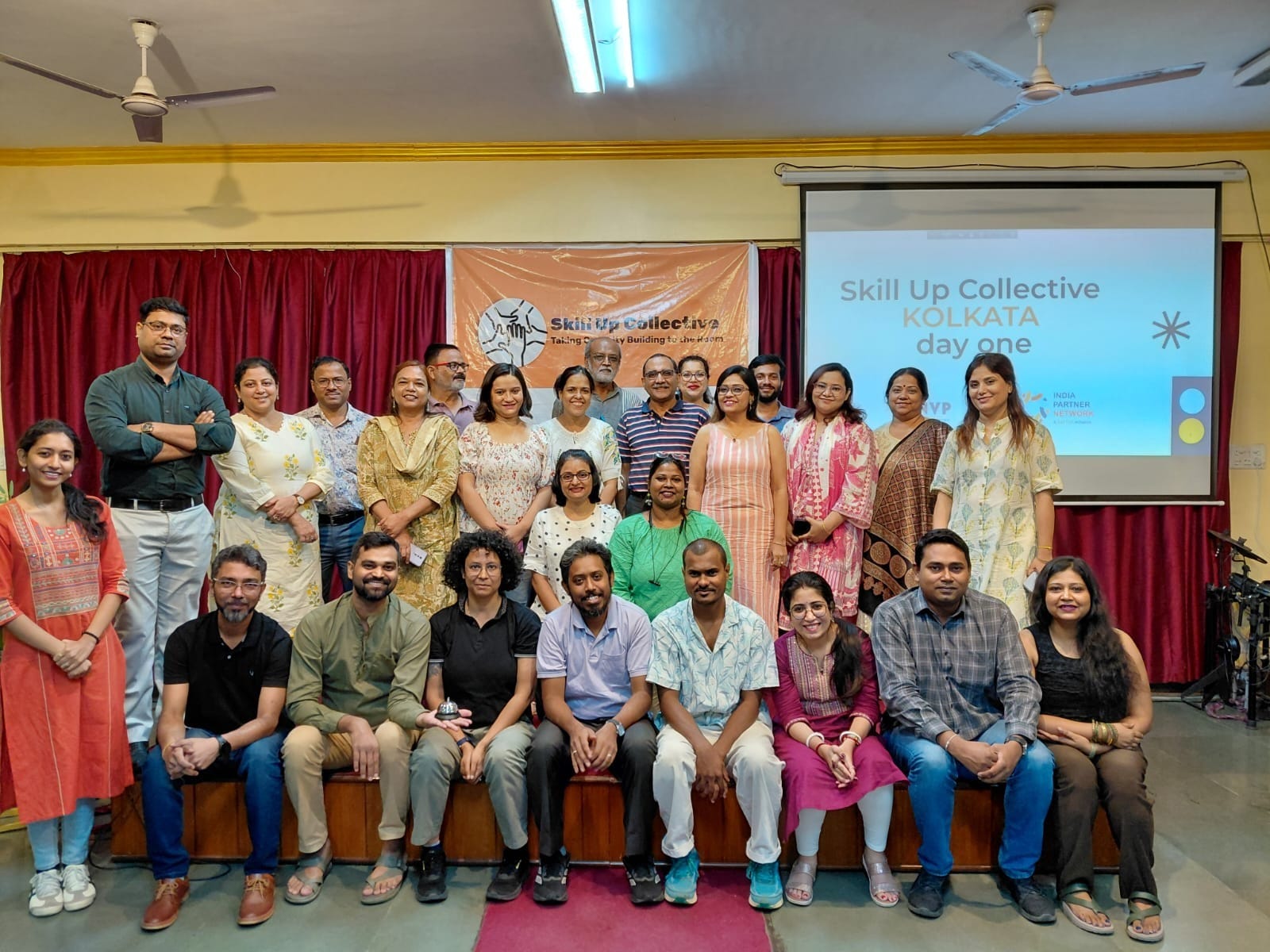
Over two days in Kolkata, at the first Skill Up Collective workshop by India Partner Network (IPN) and New Venture Partners (NVP), something felt different.
Twenty-two nonprofit leaders and practitioners came together to learn about fundraising. The agenda covered everything from fundraising readiness and donor mapping to communication, proposal writing and outreach planning. Pankaja led the sessions, with Arshad facilitating parts of the programme, and featured guest speakers Snigdha Shah, former CEO of the SVP Kolkata Chapter, and Kakoli De, Assistant Director at CINI.
But what stayed with me wasn’t the agenda. It was what happened between the sessions, during the activities, and in the conversations over tea. The workshop revealed something much larger about how nonprofits learn and perhaps how we all, as ecosystem builders, funders and capacity-building organisations, need to think differently about supporting them.
Lesson 1: Nonprofits don’t struggle with fundraising knowledge. They struggle with applying it.
The workshop wasn’t short on frameworks. Participants discussed donor pipelines, fundraising readiness, communication strategies and proposal writing. Yet the moments where people paused weren’t during the presentations - they were during the activities.
Identifying potential donors. Crafting a one-minute pitch. Explaining why their organisation mattered to a funder.
These weren’t difficult because participants lacked knowledge. They were difficult because they demanded something much harder: applying familiar ideas to the realities of their own organisation.
Perhaps that’s the real challenge with capacity building. We often measure learning by what people know, when what really matters is what they can do once they leave the room.
Lesson 2: Good learning builds confidence, not just competence.
As the workshop progressed, one request kept resurfacing.
“Show us how someone actually did it.”
Participants wanted to see successful proposals, hear fundraising journeys from organisations like their own and understand what happened between identifying a donor and securing a grant. One participant suggested taking a real proposal and dissecting it paragraph by paragraph. Another wanted to hear from a smaller NGO that had successfully raised funds.
At first, these sounded like requests for more examples. Looking back, they felt like requests for something deeper.
Participants weren’t asking someone to do the work for them. They were looking for reassurance that they were on the right track.
That distinction matters.
Learning fundraising isn’t just about understanding frameworks. It’s about building the confidence to apply them. A proposal may be technically sound, but submitting it still takes confidence. A pitch may be well structured, but delivering it to a donor takes confidence.
Perhaps that’s why activities and peer feedback became some of the most valuable parts of the workshop. Participants weren’t simply absorbing information - they were testing their ideas, receiving feedback and refining them.
Good capacity building doesn’t just transfer knowledge.
It builds the confidence to act.
Lesson 3: Fundraising starts long before the ask.
One question surfaced repeatedly during conversations with participants: “Where do we actually find donors?”
The challenge wasn’t writing proposals or crafting better pitches. It was identifying the right funders, reaching them and earning the opportunity to have a conversation in the first place.
Several participants spoke about the importance of introductions, referrals and what one person described as “somebody’s somebody” helping open the first door.
That stayed with me.
We often think of fundraising as something that begins with a proposal. But perhaps it begins much earlier - with visibility, relationships and trust.
Throughout the workshop, participants spent time stepping into the shoes of different donor personas, not asking “How do we get funding?” but “What does this donor actually need?” It made me wonder whether the opposite conversation happens often enough.
How often do funders get the chance to step into nonprofit shoes? To understand what it means to build credibility with limited resources, navigate months of uncertainty or spend weeks trying to secure a first conversation.
Perhaps stronger fundraising ecosystems don’t just need nonprofits that understand donors. They also need donors and ecosystem organisations that better understand the realities nonprofits work within.
After all, the strongest partnerships aren’t based on proposals alone. They’re built on mutual understanding.
Lesson 4: Community isn’t a bonus. It’s part of the learning.
One of the first things I noticed had nothing to do with fundraising.
Before the workshop had even begun, participants were introducing themselves, exchanging stories and talking about their organisations. Those conversations continued over tea breaks, lunch and long after the sessions had ended. People compared donor experiences, offered advice, celebrated small wins and spoke candidly about the setbacks that rarely make it into case studies.
It quickly became clear that networking wasn’t simply an added benefit of attending the workshop. For many, it was one of the reasons they had travelled to Kolkata.
That made me reflect on something we don’t often acknowledge.
Fundraising can be an isolating journey. Many nonprofit leaders spend years navigating rejection, funding uncertainty and difficult decisions with very few opportunities to learn alongside peers who truly understand those experiences.
Perhaps that’s why the conversations outside the sessions felt just as valuable as the sessions themselves. They reminded everyone in the room that they weren’t navigating these challenges alone.
The workshop wasn’t just about fundraising. It was about creating a space where content, practice, community and reflection came together because sometimes, knowing that others are asking the same questions is a form of learning in itself.
Looking Ahead
As I left Kolkata, I realised the workshop wasn’t really about fundraising.
It was about helping nonprofit leaders pause, reflect and look at their own organisations through a different lens.
Every activity challenged participants to ask practical questions: Who is the right donor for us? Is our pitch compelling? How would a funder view our organisation? What should we do next?
The workshop didn’t provide a one-size-fits-all formula, and perhaps that was its greatest strength. Instead, it created the time and space for participants to think, test ideas, receive feedback and leave with greater clarity than they arrived with.
As the social sector continues to invest in capacity building, it’s worth asking whether we’ve focused too much on delivering information and too little on creating opportunities to apply it. Webinars, templates and frameworks all have their place. But lasting learning often comes from practice, reflection, feedback and conversations with peers who are navigating similar challenges.
Perhaps the true measure of a workshop isn’t what participants learn in the room, but what they go back and do differently once they return to their organisations.
Three reflections I leave you with:
1. Knowing is different from doing.
The real challenge isn’t understanding fundraising concepts — it’s applying them within the unique context of an organisation. Capacity-building efforts should create more opportunities to practice, reflect and experiment.
2. Confidence is built through practice.
Information is important, but confidence grows when organisations test their ideas, receive feedback and learn from real-world experiences. Sometimes, a thoughtful conversation or peer review can be more valuable than another presentation.
3. Strong fundraising ecosystems are built on mutual understanding.
Fundraising is about more than proposals and pitches. It is built on relationships, trust and empathy. When nonprofits better understand funders — and funders better understand the realities nonprofits navigate — stronger partnerships become possible.
Ashwini Rajamani
Engagement lead - IPN